Change you can measure
Glow Up Checklist: Every Item With Costs and Reasons
By The Makeover Lifestyle Editorial Team · Updated 2026-08-18
A checklist only works if it comes with three things most checklists skip: a baseline so you can measure change, a budget so the list has edges, and an order so the high-leverage items happen first. This page is all three. Every item below carries its time cost, its dollar cost, and the visible change you can honestly expect, organized by how much each one actually moves photographs rather than by how well it performs on a mood board.
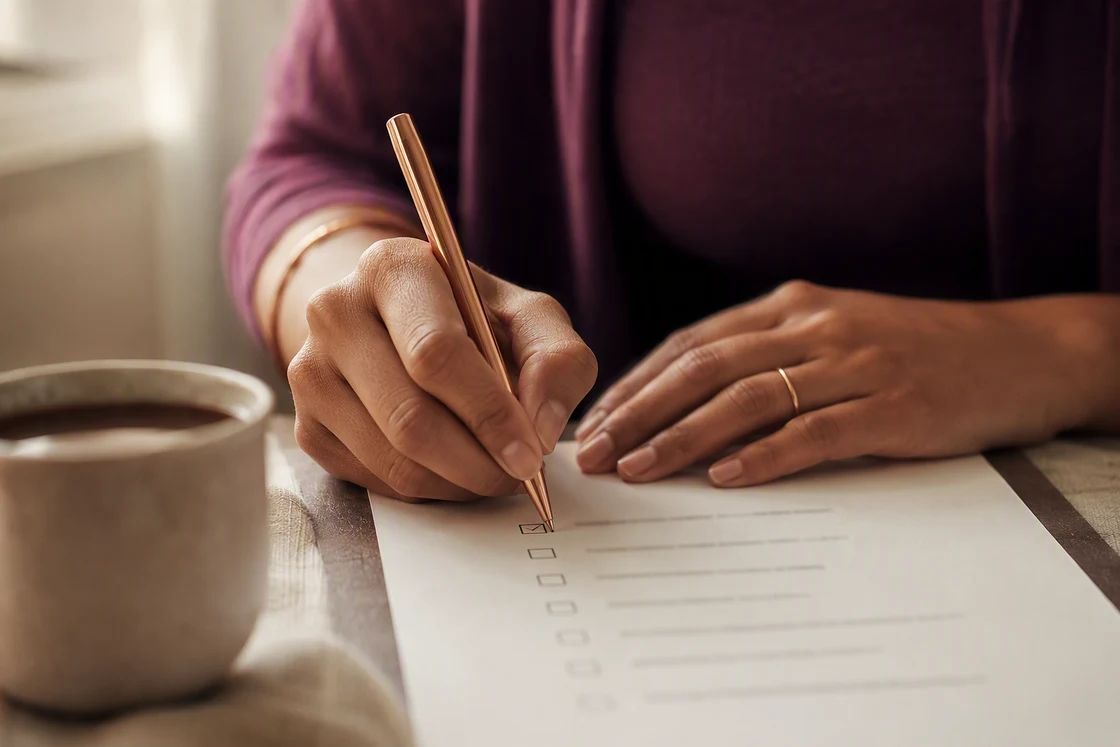
Why does a checklist need a baseline?
Because a checklist without a starting point can only measure completion, not change. Before ticking anything else, spend one evening recording where you are.
The Pinterest version of this page is a list of pleasant activities with no way to tell whether any of them worked. The fix costs nothing and takes under an hour:
- ☐ Baseline photos. Same spot, indirect daylight (facing a window), phone at eye level, no filters, neutral face, front and profile, plus one full-length set in your normal clothes. These are for you alone. (Time: 15 minutes, once. Cost: $0. Expected effect: none by itself, but it is the difference between knowing and guessing at day 30.)
- ☐ A written list of three to five specific changes. "Look better" is not actionable. "Haircut shape is five years old, brows undefined, two of three weekly outfits do not fit at the shoulder" is a plan. (Time: 20 minutes. Cost: $0. Expected effect: it caps the project, which is what keeps a checklist from becoming a spiral.)
- ☐ A budget number, picked before you shop. A $150 version and a $1,500 version of this checklist both exist and both work; they are different projects, and the number decides which one you are running. (Time: 5 minutes. Cost: $0 now, everything later. Expected effect: none visible, total control over the receipt.)
Everything after this point assumes the baseline exists. If you skip it, the checklist still functions as a list of good habits; it just stops being measurable, and measurement is the entire reason this page is organized the way it is.
Daily non-negotiables
Three items, under fifteen minutes combined, mostly free. These carry more of the visible result than everything else on the page put together.
- ☐ Keep a fixed sleep window. research-backed Same sleep and wake time, seven to nine hours, weekends included as closely as life allows. This is the rare appearance item with controlled experimental evidence: observers rated photographs of the same people as less healthy and less attractive after sleep deprivation than after a normal night [1]. (Time: 0 extra minutes, it is scheduling, not effort. Cost: $0. Expected effect: under-eye area and skin tone within days, and it compounds for the whole project.)
- ☐ Cleanser, moisturizer, then SPF every morning. research-backed The three-step floor of dermatologic self-care. The sunscreen line is not folklore: in a randomized trial of 903 adults, the group assigned to daily sunscreen showed no detectable increase in measured skin aging over 4.5 years, while the discretionary-use group did [2]. (Time: 4 minutes. Cost: $30 to $150 for 90 days depending on brand tier. Expected effect: gradual texture and evenness gains over weeks; the SPF payoff is mostly preventive and shows up as what does not happen.)
- ☐ Drink water like an adult, not like a protagonist. mixed evidence The "glass skin from a gallon a day" claim outruns the data. One small 2015 study found measurable hydration and elasticity gains from adding 2 liters daily, but mainly in people whose baseline intake was low [3]. If you already drink normally, more water is not a visible lever. (Time: 0. Cost: $0. Expected effect: real if you are chronically under-drinking, roughly nothing if you are not.)
Notice the pattern: the daily tier is nearly free. The checklist economy wants this tier to be a product shelf; it is actually a calendar.
Weekly items
Two to three items, about thirty minutes a week. This tier maintains texture; it does not transform anything, and items claiming otherwise are tagged accordingly.
- ☐ Exfoliate once or twice a week, matched to your skin. Dermatologists' published guidance: gentler chemical exfoliants for sensitive, dry or acne-prone skin, stronger chemical or mechanical methods only for oilier, thicker skin, and caution with aggressive exfoliation on darker skin tones where it can trigger dark spots [4]. The more aggressive the method, the less often it should happen. (Time: 5 minutes. Cost: $10 to $30 per 90 days. Expected effect: smoother texture within two to three weeks; over-exfoliating reverses the gain, which is why the cadence is the whole item.)
- ☐ Hair mask once a week, with honest expectations. mixed evidence Conditioning masks genuinely coat and smooth the hair shaft, so hair looks and handles better for a few washes. What they do not do is repair damaged hair structurally; the effect is cosmetic and resets. Worth its ten minutes if you like the result, not a restoration program. (Time: 10 minutes. Cost: $8 to $25 per 90 days. Expected effect: temporary shine and manageability, renewed weekly or not at all.)
- ☐ A ten-minute grooming pass. Nails clean and shaped, brow strays tidied along the professionally set line (see the monthly tier), anything fraying caught early. (Time: 10 minutes. Cost: $0 once you own clippers and tweezers. Expected effect: small individually, but this tier is what "put together" is actually made of.)
Monthly and one-time items
This is where the money goes and where the biggest single-day changes live. Four items: haircut, brows, wardrobe audit, tailor.
- ☐ A current haircut, then a 6-to-10-week cadence. convention No study measures "current-ness," but a cut is the fastest whole-appearance change money buys, and it is the item stylists most consistently flag when a look reads dated. Bring photos to a consultation and ask what your hair will actually do. (Time: 1 to 2 hours. Cost: $45 to $150 per cut at US salons, average around $70. Expected effect: the largest single jump on this entire page, same day.)
- ☐ One professional brow shaping, then self-maintain. convention Small area, disproportionate effect on how finished a face reads. Pay for the mapping once; your tweezers keep the line afterward for free. (Time: 30 minutes. Cost: $15 to $40, once. Expected effect: second-best change per dollar on the page.)
- ☐ A wardrobe audit. One afternoon, everything tried on, three piles: fits, could fit with tailoring, does not fit and will not. The third pile leaves. You are not buying anything yet; you are finding out what you own. (Time: 2 hours, once. Cost: $0. Expected effect: none directly, but it converts the tailor visit from guesswork into a shopping list.)
- ☐ A tailor visit for your two or three best garments. convention Fit at the shoulder and hem is the difference photographs register; tailoring an existing garment frequently outperforms buying a new one. (Time: 1 hour plus pickup. Cost: $15 to $75 per garment. Expected effect: clothes stop almost-fitting, which reads immediately in full-length photos.)
Sequencing note: haircut and brows go first because they deliver the fastest change and the morale to keep the daily tier running. The wardrobe items can wait for week three or four.
What is deliberately not on this checklist?
Anything whose cost-to-visible-change ratio loses to every item above. The skip list is as load-bearing as the checklist.
A checklist is also a budget allocation, so exclusions need reasons:
- 12-step skincare routines. Each added step is a purchase plus a recurring daily time cost, and the visible gap between three steps and ten is far smaller than the receipt gap. The three-step floor above is the load-bearing part.
- Facial tools and gadget skincare. Rollers, sculpting stones, home devices. Any effect on puffiness is temporary; evidence for lasting visible change is thin to absent. If one relaxes you, that is a valid reason to own it, filed under relaxation.
- Supplement stacks for skin and hair. Absent a diagnosed deficiency, oral supplements are the widest gap on this page between marketing confidence and demonstrated visible effect. Food and sleep are doing this job already.
- Haul shopping. convention Ten trend garments produce less visible change than three owned garments and a tailor visit. Volume is not a strategy; fit is.
- Anything irreversible attempted at home, late, alone. Box bleach, self-cut bangs, aggressive peels. These convert money into risk. Irreversible work goes to a professional or waits 48 hours, whichever comes first.
The test for any candidate item: would it survive your day-zero written list? If it does not map to one of your three to five named changes, it is entertainment spending. Entertainment is fine; book it as entertainment.
How do you run this checklist in 30 days, and what does it cost?
Week one: baseline plus the appointments. Weeks two through four: the daily and weekly tiers on repeat, wardrobe items in week three. Total spend lands between roughly $100 and $500 for the month.
| Tier | Items | Time over 30 days | 30-day cost band |
|---|---|---|---|
| Baseline (once) | Photos, written list, budget number | About 1 hour | $0 |
| Daily | Sleep window, cleanser + moisturizer + SPF, honest hydration | About 2 hours total | $15 to $60 |
| Weekly | Exfoliation, hair mask, grooming pass | About 2 hours total | $10 to $30 |
| Monthly / one-time | Haircut, brow shaping, wardrobe audit, tailor | About 5 hours | $75 to $300 |
| Skip list | Everything in the previous section | 0 | $0, and that is the point |
If you want this sequenced day by day rather than as tiers, the companion page the 30-day glow up plan walks the same items through a calendar with the appointments placed on specific days. And if the cost bands above raise questions, the full line-item pricing, with 2026 US survey data and three fully worked budgets, is in how much a makeover costs. The short version holds here too: the items that photograph best (sleep, cut, brows, fit) all sit at the cheap end of the table.
Can you print or save this checklist?
Yes. This page prints cleanly: the checkbox lists keep their boxes, there are no scripts or popups, and the whole thing fits on a few sheets.
A checklist you have to re-find is a checklist you stop using. Two options:
- Print it. Use your browser's print function; the page is built to come out as plain, legible text with the ☐ boxes intact, so you can tick them with an actual pen. Stick it inside a closet door or a bathroom cabinet, somewhere you already look daily.
- Save it. Print to PDF for your phone, or bookmark the page. If you keep it digital, pair it with the day-zero photos in the same folder so the baseline and the list live together.
One honest note on checklist psychology: the paper version tends to outperform the saved tab, because the daily tier lives in physical spaces (bed, sink, mirror) rather than on a screen. Put the list where the habits happen.
Frequently asked questions
What should be on a glow up checklist?
Three tiers: daily items that are nearly free (a fixed sleep window, cleanser plus moisturizer plus SPF), weekly maintenance (matched exfoliation, an honest hair mask, a grooming pass), and monthly or one-time items where the money goes (a current haircut, one professional brow shaping, a wardrobe audit and a tailor visit). A baseline photo set and a written budget come before all of it.
How long does the checklist take each day?
Under fifteen minutes. The sleep window costs zero extra minutes because it is scheduling rather than effort, the morning skin routine takes about four, and the hydration item takes none. The weekly tier adds roughly thirty minutes across the whole week.
What is the cheapest item with the biggest visible effect?
The fixed sleep window, which is free and is the one item here with controlled experimental evidence behind its visible effect. Among paid items, the haircut delivers the most change per dollar, typically $45 to $150 at US salons.
Do I have to do every item on the list?
No, and you should not try. Pick the items that map to the three to five specific changes on your day-zero written list and ignore the rest. A checklist run at 60 percent against a baseline beats one run at 100 percent with no way to measure the result.
Does drinking more water belong on a glow up checklist?
With an asterisk. The evidence is mixed: one small study found hydration and elasticity gains from adding 2 liters a day, but mostly in people whose baseline intake was already low. If you drink normally, extra water is not a visible lever, which is why the item here is honesty about intake rather than a gallon target.
How often should exfoliation appear on the checklist?
Once or twice a week for most people, matched to skin type per dermatology guidance: gentler chemical methods for sensitive, dry or acne-prone skin, and extra caution with aggressive methods on darker skin tones, where over-exfoliation can cause dark spots. More aggressive means less often.
Are hair masks worth keeping on the list?
As a weekly cosmetic item, yes; as a repair program, no. Masks coat and smooth the hair shaft so it looks and handles better for a few washes, then the effect resets. They do not structurally fix damaged hair. Ten minutes and a modest cost for a real but temporary result.
What order should I do the checklist in if money is tight?
Haircut first, then tailoring what you already own, then the skin basics, then the one-time brow shaping. That order is a ranking by visible change per dollar, and the free daily tier runs underneath all of it from day one. The worked $200 version of the full budget is on our makeover cost page.
- Axelsson J, Sundelin T, Ingre M, et al. Beauty sleep: experimental study on the perceived health and attractiveness of sleep deprived people. BMJ. 2010;341:c6614.
- Hughes MC, Williams GM, Baker P, Green AC. Sunscreen and prevention of skin aging: a randomized trial. Annals of Internal Medicine. 2013;158(11):781-790.
- Palma L, Marques LT, Bujan J, Rodrigues LM. Dietary water affects human skin hydration and biomechanics. Clinical, Cosmetic and Investigational Dermatology. 2015;8:413-421.
- American Academy of Dermatology. How to safely exfoliate at home.
Get the launch note More guides coming · [email protected]